
ADTS and AVX-10K –
Calibrating to Stratosphere
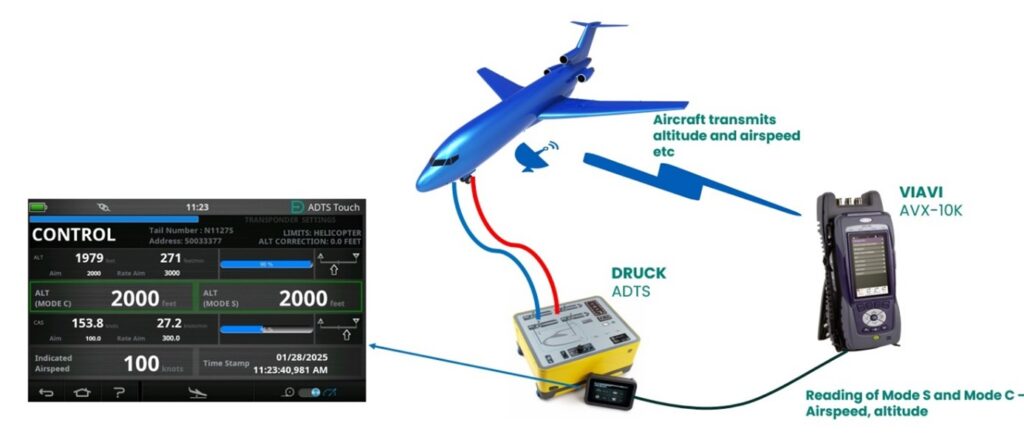
Accurate testing of aircraft systems is essential to ensure both safety and regulatory compliance. Two key areas that require regular verification are air data systems and RF avionics, which together support navigation, surveillance, and flight safety. By combining the Druck ADTS-Family with the Viavi Solutions AVX-10K, maintenance teams gain a flexible and efficient solution that covers both domains within a unified testing workflow.
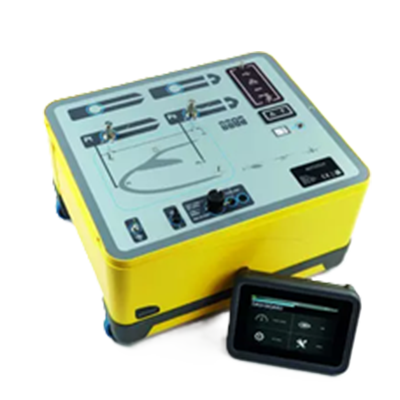
ADTS-family
The ADTS-Family is designed to simulate altitude, airspeed, and vertical speed by precisely controlling pressure inputs to the aircraft’s pitot-static system. Known for high accuracy and stability, these systems are used across a wide range of platforms—from light aircraft and helicopters to commercial airliners and military fleets. Their portability and automated test capabilities allow technicians to perform repeatable and standards-compliant checks directly on the flight line or in the hangar.
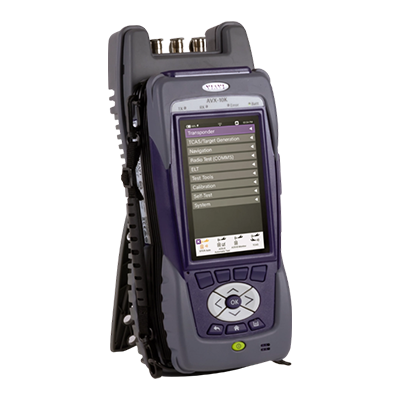
AVX-10K
The AVX-10K complements this by focusing on RF avionics performance. It enables testing of critical systems such as transponders, ADS-B, DME, and TCAS, supporting both legacy and modern avionics architectures. With its ability to simulate real-world RF environments, the AVX-10K helps technicians verify that onboard systems respond correctly to interrogation signals and broadcast accurate positional data.
When used together, these two solutions provide a comprehensive aircraft test environment. During installation, scheduled maintenance, or troubleshooting, technicians can validate that the air data inputs generated by the ADTS are correctly processed and transmitted by the aircraft’s avionics systems tested with the AVX-10K. This integrated approach is particularly valuable for verifying Mode S and ADS-B performance, where accurate altitude and pressure data must align with transmitted RF messages.
Operationally, the compatibility between the systems reduces setup time and minimizes the need to reposition equipment or repeat test sequences. This leads to shorter ground times, more efficient use of maintenance resources, and increased confidence that systems are functioning correctly before return to service.
For organizations working in line maintenance, MRO operations, or avionics installation, the combined use of ADTS and AVX-10K represents a scalable and future-proof testing strategy that supports both current and next-generation aircraft technologies.
As modern avionics increasingly depend on satellite navigation, comprehensive testing must also address GNSS performance. To complement air data and RF verification, the Viavi Solutions OSPREY GPS Simulator provides a controlled and repeatable environment for testing GNSS receivers and navigation systems without relying on live satellite signals. Together, these capabilities ensure that critical aircraft systems—from pressure and RF to satellite-based positioning—are thoroughly verified across all operational domains.
OSPREY – Reliable and Controlled GNSS Testing
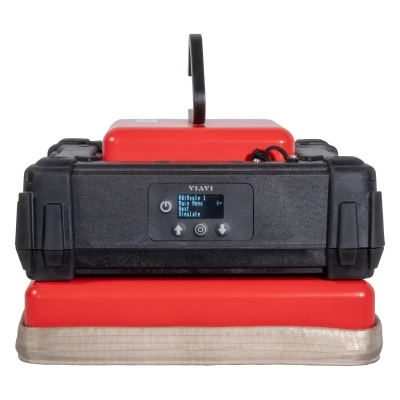
Modern aircraft and avionics systems rely heavily on satellite navigation for positioning, navigation, and timing. Ensuring that GNSS receivers function correctly under all conditions is therefore critical for both safety and regulatory compliance. The OSPREY GPS Simulator from Viavi Solutions is designed to meet this need by providing a controlled, repeatable environment for testing GNSS-dependent systems without relying on live satellite signals.
OSPREY simulates multiple global navigation satellite systems (GNSS), including GPS and other constellations, allowing engineers to recreate realistic satellite geometries, signal strengths, and environmental conditions. This makes it possible to verify receiver performance during development, integration, maintenance, and troubleshooting.
One of the key advantages of a simulator like OSPREY is the ability to reproduce challenging scenarios that are difficult or impossible to test with live signals. These include weak signal conditions, satellite outages, multipath effects, and dynamic flight trajectories. By recreating these situations in a controlled environment, technicians can validate that avionics systems continue to provide accurate and stable positioning even under degraded conditions.
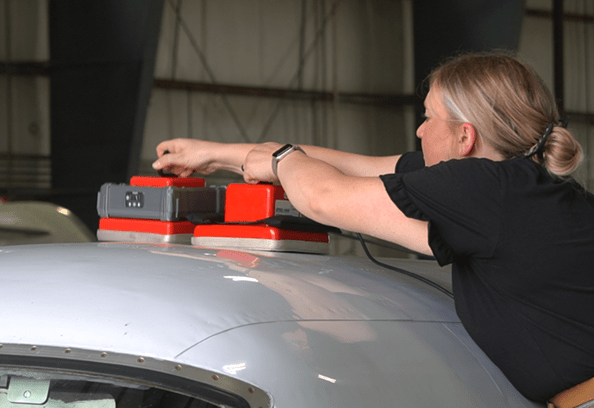
In addition to functional verification, the simulator supports regression testing and repeatable test sequences. This is particularly valuable for certification processes, software updates, and long-term fleet support, where consistent and documented test results are required.
Operationally, using a GNSS simulator also improves safety and efficiency. Testing can be performed indoors, independent of weather, satellite availability, or regulatory restrictions on RF transmissions. This reduces dependency on external conditions while enabling faster turnaround during installation or maintenance activities.
For organizations involved in avionics development, integration, or MRO operations, the OSPREY GPS Simulator provides a scalable and future-ready solution for verifying GNSS performance across a wide range of platforms and mission profiles.
Explore featured products
Learn more about the testing solutions mentioned in this article:
- Druck ADTS Family: Explore Air Data Test Sets
- Viavi AVX-10K: Explore Flight Line Test Set
- Viavi OSPREY: Explore GNSS / GPS Simulator