
Reliable Motion Data: Accelerometers, Gyroscopes and IMUs in Modern Systems

Inertial sensing technologies enabling precision beyond external references
In modern engineering systems, accuracy is often taken for granted—until external references are no longer available.
From rail transport and aerospace to industrial automation and testing environments, reliable motion data is critical. Yet satellite-based positioning systems such as GNSS are not always dependable. Signal interruptions in tunnels, urban environments, or remote locations can quickly compromise performance.
This is where inertial sensing technologies play a central role—not just as a backup, but as a foundation for continuous, high-confidence operation.
Three Technologies That Define Motion Sensing
Accurate motion tracking is built on three core sensor types—each measuring a different aspect of movement and together forming the foundation of inertial systems.
Accelerometers – Measuring Linear Motion
Accelerometers measure linear acceleration, meaning changes in velocity along one or more axes. This includes both dynamic motion, such as vibration and shock, and static forces like gravity.
Because of this, accelerometers are widely used in applications such as vibration analysis, impact testing, and motion tracking. They play a key role in areas like crash testing, biomechanics, and industrial condition monitoring.
Depending on the application, accelerometers can be implemented as analog sensors for high-resolution raw data, digital sensors with built-in signal processing, or smart sensors that output processed data directly for use in systems such as predictive maintenance and Industry 4.0.
In advanced testing environments, suppliers such as DTS are known for delivering robust, high-precision solutions capable of capturing reliable data even under extreme conditions. If you want to explore different configurations and technologies, you can browse our accelerometer range.
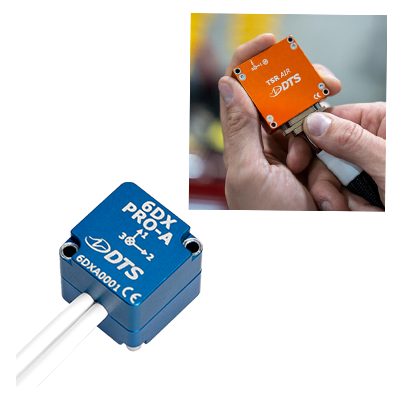
Applications:
- Automotive: Airbag Systems / Crash Test and Driving Comfort Measurements.
- Military and defense applications: Accelerometers are used in missile guidance systems and other advanced technologies.
- Civil engineering: Accelerometers monitor the safety and integrity of bridges, buildings, and other structures.
- Navigation systems: Accelerometers detect changes in velocity and direction, allowing for more accurate tracking of a vehicle’s location.
- Industrial automation and control systems: Accelerometers detect vibrations and movements in machinery, allowing for early detection of potential malfunctions.
Gyroscopes – Measuring Rotation
While accelerometers measure linear movement, gyroscopes measure angular velocity—how fast an object rotates around a specific axis.
This makes them essential for understanding orientation and rotational motion, especially in systems where no fixed reference point is available. Gyroscopes are therefore critical in applications such as vehicle dynamics, stabilization systems, and precision measurement environments.
High-performance gyroscopes are designed to deliver low noise and high stability, enabling accurate measurements even when very small rotational changes need to be detected. ASC Sensors offers a wide portfolio of gyroscopes, ranging from industrial-grade to tactical-grade performance, designed for demanding applications where precision and reliability are critical.
Applications:
- ARS are devices that directly measure angular rate, without integration in conditioning electronics.
- Vehicle handling: Crash, biomechanics, and high-rate ballistics testing.
- Autopilot Systems.
- Aerospace and Aviation – maintaining aircraft orientation and stability.
- Robotics – used to detect changes in acceleration and enable autonomous movement and navigation.
- Used in various research fields to measure and analyze rotational motion and orientation.
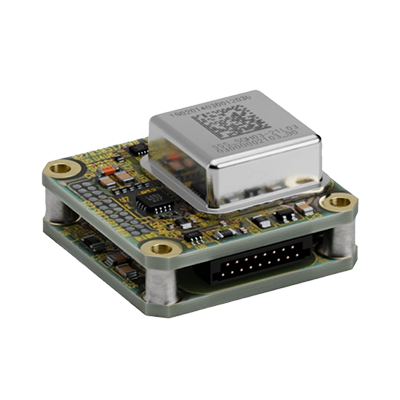
IMUs – Combining Motion and Orientation
An Inertial Measurement Unit (IMU) brings accelerometers and gyroscopes together into a single system, allowing simultaneous measurement of linear motion and rotation.
A typical IMU includes a three-axis accelerometer and a three-axis gyroscope, providing six degrees of freedom. This enables the system to track position, movement, and orientation in real time.
One of the key advantages of IMUs is their ability to operate independently of external signals such as GNSS. This makes them particularly valuable in environments where satellite signals are unavailable or unreliable.
Solutions such as the ASC IMU 8 demonstrate how high-performance inertial systems can maintain accuracy even during temporary GNSS loss, reducing accumulated errors in velocity, position, and orientation over time.
Within this area, suppliers like Inertial Labs provide advanced IMU systems with integrated processing and support for platforms such as ROS and LabVIEW, enabling efficient integration into complex applications.
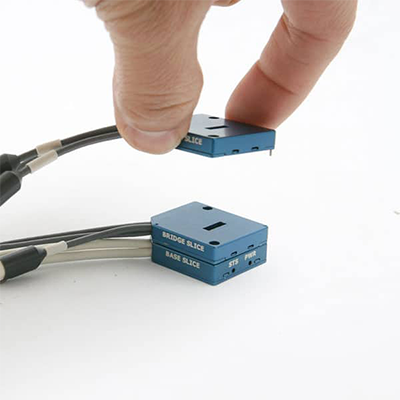
Applications:
- Aerospace and Defence / Flight stabilization in fixed-wing, VTOL and multicopter drones /ships and missiles.
- Orientation tracking for autopilots and gimbals.
- Localization of trains is important for safety in rail transport. It is used for example for the release and occupation of track sections.
- Automotive and Autonomous Vehicles.
From Sensors to Reliable Systems
Rather than being used in isolation, accelerometers, gyroscopes, and IMUs are increasingly combined to create robust sensing systems.
Each technology contributes a specific type of data—linear motion, rotation, and combined positioning—which together enables a more complete and reliable understanding of movement. This system-level approach ensures performance even in complex and unpredictable environments.
Enabling Performance in Uncertain Environments
As systems become more autonomous and operate in more demanding conditions, the need for reliable, independent motion data continues to grow.
Inertial sensing technologies make it possible to maintain continuous operation, improve system reliability, and ensure confidence in positioning and control—even when external references cannot be trusted.